
On this page
What wind and trees do to gutters
| Damage | Cause | What to look for |
|---|---|---|
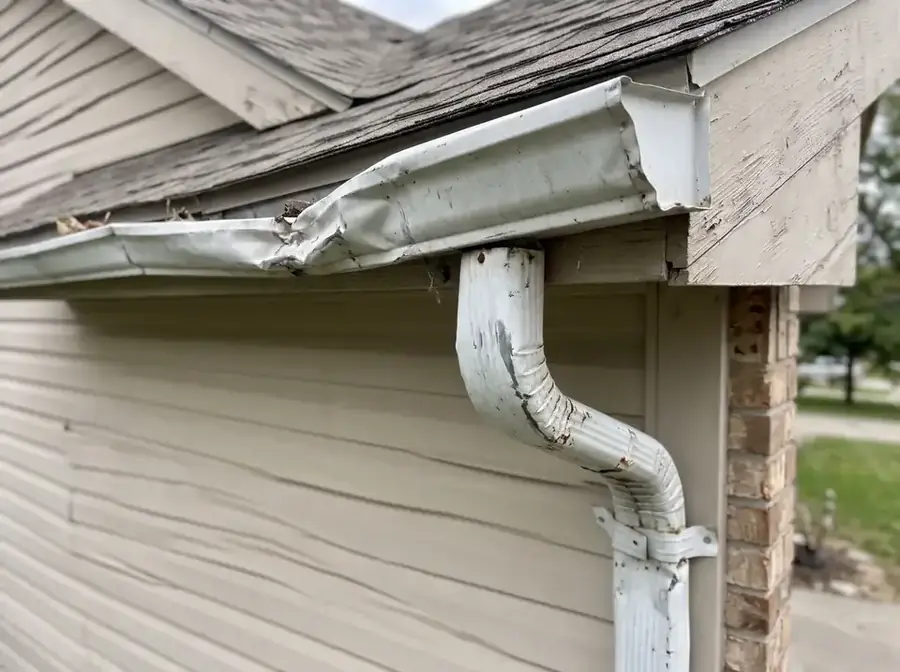
| Bent or kinked runs | Falling limbs, ladders during clean-up | A visible kink that holds water |
| Crushed downspouts | Limbs, wind-blown debris | Flattened or split sections |
| Torn hangers | Limbs, wind, a gutter full of wet debris | Gutter leaning out or dropping |
| Gutter pulled off | Large limb or tree | Sections hanging or on the ground |
| Damaged fascia and roof edge | Any of the above | Cracked boards, lifted shingles, missing drip edge |
| Dents | Cones, small branches | Dents along the front face holding water |
Redmond's storm history
The area's big storms are windstorms, and most of their damage comes from trees:
- December 2006. A severe windstorm hit Redmond; Microsoft shut down a large portion of its Redmond campus, and the regional Hanukkah Eve windstorm left more than 1.8 million homes and businesses across the Pacific Northwest without power.
- December 2018. Gusts of up to 45 mph left 150,000 Puget Sound Energy customers without power.
- November 19, 2024. A bomb cyclone caused a mass outage across Puget Sound Energy's service area, with the biggest impact in King County. Eastside Fire and Rescue answered more than 250 calls about downed trees, and parts of Redmond were still dark days later.
Smaller storms bring branches down most winters. Houses under tall firs and big-leaf maples see the most damage.
What to do after a windstorm
- Stay safe. Keep well away from downed power lines and call 911 if one is sparking or across a road. Report outages to Puget Sound Energy. Keep people away from hanging gutters.
- Report blocked streets. Trees blocking a public street go to the city or, in unincorporated areas, King County roads.
- Photograph everything. Gutters, downspouts, fascia, the roof edge and any fallen limbs, from several angles, before anything is moved. Note the date.
- Prevent further damage. If water is getting into the house, temporary measures such as a tarp are reasonable; keep receipts.
- Call your insurer before signing any repair contract, and ask what they need.
- Get an inspection and written estimate from a registered contractor who checks the gutters, fascia and roof edge.
Checking contractors after a storm
After big storms, demand for repairs spikes. Washington requires every construction contractor to register with L&I and carry a bond and insurance. Look up anyone you are considering in L&I's Verify a Contractor tool, and expect a signed Notice to Customer before work starts on any home job of $1,000 or more. The City of Redmond also says a business license is required to do business in the city.
How storm repairs are done
- Bent sections are replaced; heavily damaged runs are often replaced whole.
- Torn hangers are replaced with hidden hangers screwed into solid wood.
- Crushed downspouts and elbows are replaced and strapped to the wall.
- Damaged fascia is cut out and replaced before the gutter is re-hung.
- The roof edge is checked for lifted shingles and damaged drip edge.
If several runs are damaged, replacement with heavier coil may be the better option, and the moment to fix undersized outlets at the same time.
Insurance
Sudden damage from wind or a falling tree is often covered by homeowners insurance, subject to the deductible; gradual wear, clogs and rot generally are not. A written estimate that describes the storm damage, with photos, helps the claim. Landslide damage is often excluded from standard homeowners policies, so check yours. This page is general information, not insurance advice.
Related pages
- Gutter repair
- Fascia and soffit repair
- Gutter replacement
- Aluminum gutters in heavier coil